Video games have been previously incorporated into my learning experiences as an elementary school and early middle school student. We used websites such as CoolMath.com and Study Island as tools to aid the curricula we were focusing on. I limitedly play other video games on my PS4 and online games on my phone, but I would not consider myself a game guru. I do not particularly crave playing games other than puzzles such as sudoku or nonagrams, but I will participate as a way of socializing with friends. I am comfortable with the technology involved in video gaming and my ability to learn new games.
When I was looking for a game, I hoped to find a video game that would be accessible to young learners. I wanted to find a game that would not overcomplicate the objectives or add effects that would distract from the learning goals. I was hoping to use the game a way to promote student learning while promoting all types of students. Giving greater challenge to those excelling in the lesson or more support to the students that need some extra instruction.
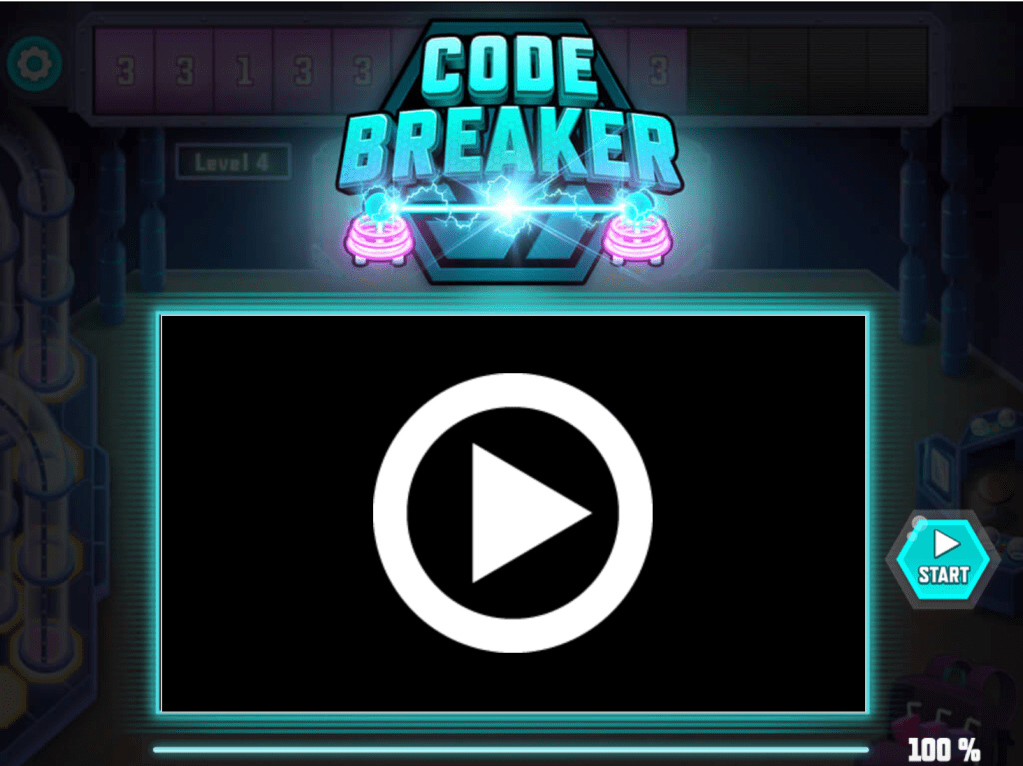
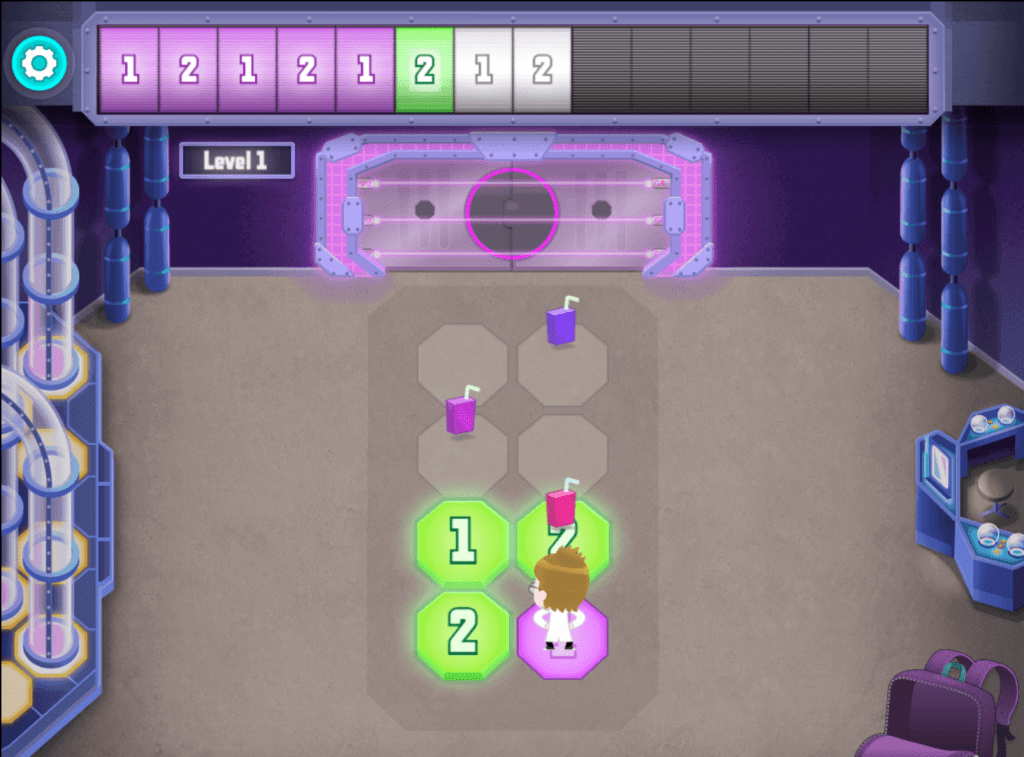
The game that I chose is from the PBS website and called Code Breaker. The purpose of the game is to find the number pattern within the purple numbers provided at the top of the screen (Image 2). Once the pattern is identified, the player should move the character across the numbers to continue the pattern until they get to the gate, leading them to the next level. As I was exploring the program I wondered how they helped students struggling to pass each level. The solution is that the green and grey blocks appear after the original purple blocks in order to have the students work through the pattern easier (Image 2). Levels begin to gain difficulty as the codes become more complex and other environmental features are brought into action such as lasers (Image 3). This game is able to automatically differentiate for the students based on their performance in each level.
I really focused on the playability of the game and how a potential student might respond to the different levels and instructions. “If the game is too complicated, they’ll spend more time trying to play than learning from playing”(MindShift, 20). Code Breaker seems to be a very straight forward game in which the characters speak out loud, giving short explanations throughout the game to help the player along. In my exploration thus far, I have discovered a straight forward game that provides proper differentiate for effective classroom learning.

 Thea's ED 386 Blog
I really like this game, and it seems like it would be really effective in teaching number patterns to young students! I really like how this game is something that can be automatically differentiated to each student because the levels get harder as you go along. I have some questions about the game. If the students pass a couple levels and then begin to struggle with the next, how are they going to be able to figure out what to do next? Is there some sort of a “hint” button or another way that they can move further into the game without becoming overwhelmingly frustrated and quitting the game all together? I do like that there are voice instructions that can help students throughout the levels though. I just wonder that if there is a stopping point for students when it gets too complicated beyond their knowledge and abilities.
LikeLike
Hi Sara,
That is a great question! There are a couple different ways that the games help students struggling to pass a level. The first way is that if you get the number wrong and have to restart, the game will add on the gray boxes for the students to use and apply to continue the pattern. Additionally, the game allows you to press a lock on the level select menu that automatically unlocks all of the levels so students can play whichever level they please. Further than that, teachers should be around to provide students assistance so less frustration will develop.
LikeLike
Hello Thea! I really enjoyed reading your post about the game Code Breaker. It was a very thoughtful post and it made a lot of great connections to how the game would be beneficial in a classroom setting. Like you said, it is incredibly important to find a game like this that is suitable for all students. It seems like a great experience because it consists of many different levels that range in difficulty level. As you said, this provides a learning opportunity for all students. If a level is too difficult, a child has the option to pick a less challenging level, and if the level is too easy, a child has the opportunity to increase the difficulty level. This is important because it keeps students from reaching frustration level and wanting to give up. However, it is also challenging enough that it helps keep students on their toes and engaged in the game.
What I think is so special about your game is its simplicity. The game is simple in its concept and its design, but it is still effective. It is fun to play while still teaching something. This relates back to Gee’s article as he discusses how it is important for games to be fun rather than cool. Often times, the focus is placed on a game having lots of special effects and being “cool.” However, it is important to not get caught in this trap of playing games just because they are “cool.” You can find games like Code Breaker that, although it may be simple, is still fun and teaches you a lot. Like you said, the game is very straight forward and playable!
LikeLike